
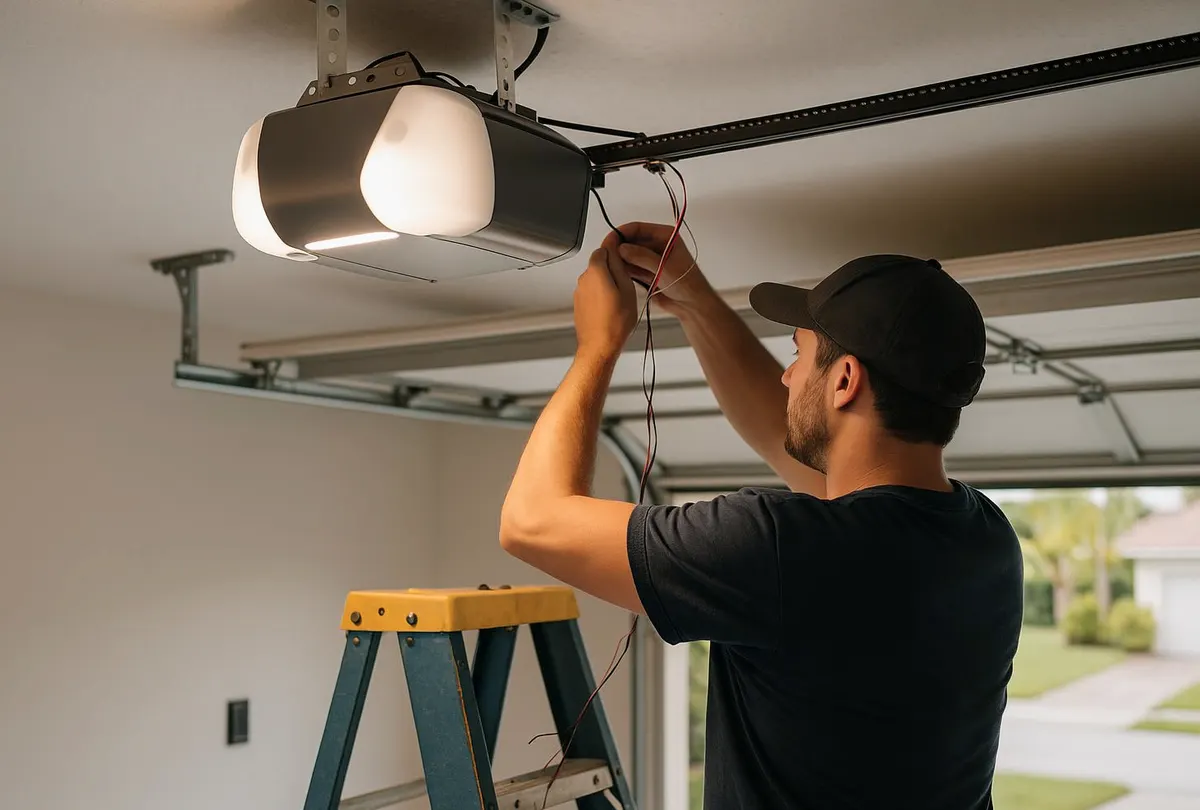
A typical late-October service call in this area starts the same way: a homeowner notices the garage door is suddenly loud, slow, or slightly crooked when it closes. Nine times out of ten, nothing actually broke overnight. The door has been slowly drying out and stiffening up all fall, and the first real cold snap just made the problem impossible to ignore. Rubber hardens, old grease thickens, and metal contracts — and a door that seemed fine in September starts showing its age the first week it drops below freezing.
Why Fall Prep Matters Here
Gratiot County winters bring deep cold, heavy snow, ice, and months of road salt tracked in on tires and boots. Add the spring thaw and mud season that follows, and a garage door and its hardware go through a rough several months. Doing a few things now, while it's still above freezing and comfortable to work outside, saves you from troubleshooting a frozen or jammed door in January.
Check the Weatherstripping First
The rubber seal along the bottom of the door and the strips along the sides are your first defense against wind-driven snow and cold air. By fall, these often show cracking, flattening, or gaps where they've pulled away from the track.
- Run your hand along the bottom seal — if it's stiff, cracked, or doesn't spring back after you press it, it's due for replacement.
- Check for daylight showing under the closed door, especially at the corners.
- Replace brittle side seals before the first snow; they're far easier to install in 50-degree weather than when they're frozen stiff.
Lubricate Before the Cold Sets In
Grease and oil thicken as temperatures drop, which is why doors that moved smoothly in September can feel sluggish or grind in December. A proper fall lubrication makes a real difference.
- Use a silicone-based or garage-door-specific lubricant on rollers, hinges, and the top of the track — not household oil, which attracts grit and gums up in cold weather.
- Wipe down the tracks first to remove summer dust and pollen buildup before applying anything.
- Avoid over-lubricating springs; a light coat is enough, and too much just collects salt and road grime over winter.
Test the Balance and Listen for Spring Strain
Cold metal contracts, and that includes torsion and extension springs. A door that was marginally balanced in summer can become noticeably harder to lift once temperatures drop, which puts extra strain on the opener.
- Disconnect the opener and lift the door halfway by hand. It should stay in place on its own. If it drifts down or feels heavy, the springs are losing tension and need adjustment.
- Listen for a loud bang or popping sound when the door operates — that's often a spring nearing the end of its life, and cold weather is when worn springs tend to finally snap.
- Springs are under serious tension and aren't a DIY repair; if the balance feels off, that's a call for a professional before winter, not after a failure.
Don't Ignore the Opener
Garage door openers deal with their own cold-weather quirks. Battery-powered remotes and keypads can lose range or stop responding reliably once temperatures drop, and safety sensors mounted low on the track are prone to getting knocked out of alignment by snow, ice chunks, or a shovel.
- Replace remote and keypad batteries now rather than waiting for them to fail in freezing weather.
- Wipe down the photo-eye sensors and check that they're aligned — a blinking light on the opener unit usually means they've shifted.
- If the opener has struggled to lift the door smoothly all year, cold weather will make it worse, not better.
Think About the Garage Itself
If your garage is attached to the house, an uninsulated door lets cold air into a space that shares walls with living areas, which can mean higher heating bills and pipes at risk if there's plumbing nearby. An insulated door panel or adding a kit to an existing door is worth considering before the hardest part of winter hits, especially with the kind of sustained cold this area sees.
When to Call Ithaca Garage Door
If your door is sluggish, unbalanced, noisy, or the seals are too far gone to patch, it's worth getting it looked at before the first real cold snap rather than during one. Ithaca Garage Door handles preventive maintenance visits that cover exactly this — lubrication, balance checks, hardware tightening, and weatherstripping replacement — along with spring replacement for doors that are clearly losing tension. Catching these issues now is a lot less stressful than dealing with a dead spring or a door frozen shut on a sub-zero morning.
If you're in Ithaca, Alma, St. Louis, Breckenridge, Ashley, Shepherd, Elwell, or Perrinton and want your garage door checked before winter settles in, give Ithaca Garage Door a call. A quick visit now can save you a cold, frustrating repair later.